
The Complete Guide to Prize Selection: Best Picks by Budget and Occasion
Prize selection is at the heart of event planning and directly impacts participant satisfaction. By choosing prizes that match your budget, audience, and event purpose, you can dramatically boost excitement during the drawing itself.
In practice, however, many event organizers struggle with questions like "What should I pick?", "How should I allocate within my budget?", or "We end up with the same prizes every time." While prize selection may seem like guesswork, organizing your audience demographics and objectives will naturally narrow down your options.
This article covers recommended prizes and ones to avoid, organized by budget tier and occasion, along with practical tips for prize distribution.
Three Fundamental Principles of Prize Selection
Offer Practical Value or Memorable Experiences
Well-received prizes share common traits: practical everyday items, things people want but wouldn't buy for themselves, and special experiences (dinner vouchers, hot spring stays, etc.). Conversely, avoid items with unclear use cases, things that are highly divisive in taste, or items that look cheap.
When in doubt, ask yourself "Would I be happy to receive this?" Adding the perspectives of "Is it easy to carry home?" and "Would family members enjoy it too?" further reduces the risk of misses.
Provide Choices
Catalog gifts remain popular because recipients get to choose for themselves. Offering multiple prizes at the same price point for winners to pick from, or digital gifts like Amazon gift cards, follows the same principle.
Include Novelty and Surprise
To energize an event, consider a headline high-value prize, unexpectedly unique items, or trending products. Prizes with buzz value naturally spark post-drawing conversations and make the event more memorable. However, chasing novelty alone while ignoring practicality leads to reactions like "That's funny, but I don't need it" -- so balance is key.
Recommended Prizes by Budget
Budget: $3-5 / 300-500 yen (Participation Prizes)
For "everyone wins" giveaways, consider bath salt sets, assorted sweets, eco bags, or premium ballpoint pens. The key is choosing individually wrapped, hygienic items that anyone can use -- everyday luxury items that people wouldn't buy for themselves.
Even on a small budget, prizes that show "someone put thought into this" are appreciated. For example, a regional specialty treat or beautifully packaged bath products create more of a special feeling than convenience store snacks. While dollar store items may seem cost-effective, they can come across as cheap, so it's safer to avoid them.
Budget: $10-30 / 1,000-3,000 yen (Standard Prizes)
Popular choices include Starbucks cards, Amazon gift cards, regional gourmet sets, tumblers, and wireless earbuds. Avoid tableware (taste-dependent), clothing items (size and preference issues), and stuffed animals (storage problems).
Budget: $50-100 / 5,000-10,000 yen (Mid-Tier Prizes)
For upper-tier or flagship prizes, consider catalog gifts, premium food items (crab, premium meat, fruit), small appliances, experience gifts (spa visits, restaurant vouchers), or Bluetooth speakers. Choose items families can share, indulgences people wouldn't buy themselves, or trending new products.
Budget: $300-500 / 30,000-50,000 yen (Grand Prizes)
Headline prize staples include the latest iPad, robot vacuum cleaners, luxury hotel stays, dinner cruise tickets, and the latest gaming consoles. Use large boxes for visual impact, clearly state the value ("Worth $XX!"), and ensure transparency with a fair drawing method.
Budget: $1,000+ / 100,000+ yen (Ultimate Grand Prizes)
For the event's showstopper, consider travel vouchers (domestic or international trips for two), high-end electronics, MacBooks, or electric-assist bicycles. Arrange delivery options since winners can't carry these home, and note that prizes exceeding certain thresholds may be subject to taxation.
Choosing Prizes by Occasion
Year-End Parties and New Year Gatherings
Since attendees span a wide age range, catalog gifts, premium food items, electronics, and travel vouchers work well. For a 100-person event, a good allocation might be: Grand Prize ($500) x1, First Prize ($300) x2, Second Prize ($100) x5, Third Prize ($50) x10, Fourth Prize ($30) x20, and Participation Prize ($5) for everyone. Check out how to liven up a company party for more ideas.
Sales Meetings and Kickoffs
For motivation-focused groups, cash or gift certificates, premium business goods (card cases, pens), and experience gifts (golf, fine dining) work well. Creating tiers based on performance to evoke a sense of "I earned this" can drive motivation for the next period.
For sales teams, presentation also matters. Announcing in advance "This will be awarded to the team that hits their targets" makes goals crystal clear. For team-based awards, choose items everyone can share (premium sweets assortments, team dinner invitations, etc.) to build unity.
Family Days and Internal Events
When employees bring families (including children), toys and games, theme park tickets, assorted sweets, and family-friendly appliances are appreciated. Separate prizes for children and adults, and consider ease of transport.
Online Events
For remote participants, digital gifts (Amazon, other e-commerce platforms), shippable food and beverages, subscription services, and online experience tickets work well. Collect addresses in advance and have shipping logistics ready for immediate dispatch after the drawing. See also how to run drawings at online events.
For online events, note that physical prizes incur shipping costs and delivery time. Centering your selection around instantly deliverable digital gift cards while reserving shipping for just the headline prize helps maintain excitement after the drawing. If your team includes members from overseas offices, consider globally usable gifts (Amazon Global, App Store/Google Play cards, etc.).
Prize Distribution Methods and Tips
Try Amida-san Free Now
Distribution methods include the classic sequential draw, simultaneous draws for time efficiency, and game-based participatory formats.
Sequential drawing builds excitement and feels fair, but takes time. Simultaneous drawing is efficient but lacks buildup. Game-based formats are fun and participatory but require more preparation. Choose based on your event's time constraints and number of participants.
The Importance of Fair Drawings
Methods where organizers can manipulate results, black-box processes where outcomes aren't visible, or systems where the same people keep winning create a sense of unfairness. Using a transparent drawing tool lets everyone verify the process and eliminates suspicion. Fair drawing practices are essential when high-value prizes are involved.
Techniques for Building Excitement
Save the grand prize for last to create a climax, clearly state values ("Worth $XX!"), and use background music to set the mood. Don't forget to give participation prizes to everyone as consolation for those who didn't win.
The moment a winner is announced, having the MC enthusiastically call out "Congratulations!" and encourage applause from the audience can transform the room's atmosphere. Instead of handing over a plain box, wrapping prizes with decorative paper and ribbons amplifies the winner's joy. If time permits, inviting the winner to share a quick comment builds anticipation for the next draw.
Show the Prizes on the Participant Page (Pro)
With the event decoration feature in the Organizer Plan (Pro), you can put prize photos and the full lineup right on the participant page.
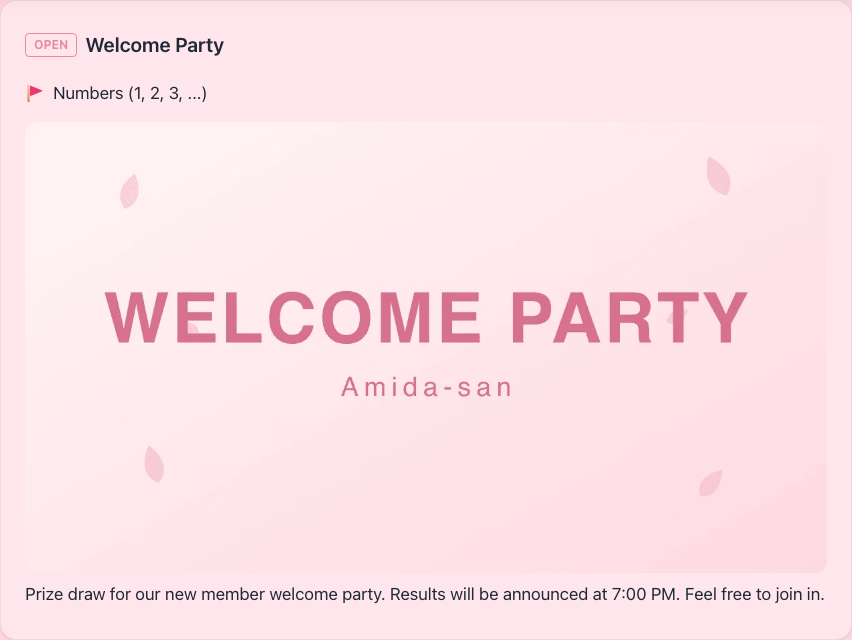
For example, list the prize lineup in the description ("Grand Prize: $500 travel voucher / 1st Prize: Robot vacuum / 2nd Prize: Premium catalog gift") and use a photo of the grand prize as the custom header image. The moment a participant opens the drawing link, they think "I want to win this," and they put real thought into adding their horizontal lines.
For external campaigns, the look of the participant page becomes a direct signal of trust as prize values go up. Set your brand color as the theme, and along with the prize photos include the organizer name, the drawing date, and a contact channel -- participants can enter with confidence, and you reduce post-drawing trouble. For details, see How to Decorate Your Amidakuji Event Page.
Common Pitfalls and Solutions
Leftover or Insufficient Prizes
This usually stems from headcount estimation errors or day-of absences. Prepare extra and carry surplus over to the next event. Buying from stores with return policies provides a safety net. For perishable food prizes, choose items with long shelf lives or estimate quantities carefully, since excess may go to waste.
Underwhelming Prizes
Causes include insufficient budget, taste-biased selections, or outdated products. Use catalog gifts to offer choices, research trending popular products, and select with your audience demographics in mind.
Drawing Takes Too Long
Too many prizes, inefficient drawing methods, or lengthy announcements are common causes. Focus on fewer, higher-quality prizes, use an efficient drawing tool, and keep strict time management. See common event management mistakes for reference.
Tips for Prize Procurement
The three main procurement channels are Amazon/e-commerce (wide selection with reviews), catalog gift specialty shops (many options with included wrapping), and local specialties (novelty value and regional contribution). Each has pros and cons, so choose based on the type of prize.
When purchasing from online retailers, always check review ratings and verify that product photos match descriptions. Catalog gifts come with courses organized by price tier, making it easy to select based on participant count and prize levels. Local specialties feel special for members joining from distant locations and serve as great conversation starters.
Timing is also crucial. Finalize major prizes at least two weeks before the event, and complete receipt and content verification one week prior. During busy seasons (year-end, etc.), deliveries take longer, so place orders with extra lead time.
As a budget allocation guideline, for a total budget of $1,000: Grand Prize (30%: $300 x1), Upper Prizes (40%: $100 x4), Mid Prizes (20%: $50 x4), Participation Prizes (10%: $5 x20). The key is allocating 30-40% of your budget to the headline prize, distributing so many people win something, and not forgetting participation prizes.
Conclusion
The most important aspect of prize selection is choosing from the "recipient's perspective" -- what will actually make participants happy. Understand your audience's age range and demographics, allocate 30-40% of your budget to headline prizes, and offer choices through catalog gifts. By ensuring transparency with a fair drawing method, you can boost satisfaction across the entire event.
Related articles:
Try Amida-san Now!
Experience fair and transparent drawing with our simple and easy-to-use online ladder lottery tool.
Try it Now