
How to Run a Smooth and Transparent PTA Officer Selection Process
How much time does your school spend on PTA officer selection each year?
With more dual-income families and growing concerns about workload, finding volunteers has become increasingly difficult. Push-back, distrust toward drawing methods, and the burden falling on the same few parents are issues reported nationwide. For many schools, the annual officer selection has become the single biggest headache at parent meetings.
This article provides a practical guide to transparent officer selection methods that every parent can accept.

Three Reasons PTA Officer Selection Is So Difficult
Nobody Wants to Volunteer
As dual-income households become more common, fewer parents can dedicate time to PTA activities. Heavy workloads, rigid legacy procedures, and the feeling of being pressured all make the shortage of candidates worse each year.
Many parents struggle to attend weekday meetings due to work schedules. The fear that taking on a role might interfere with their jobs discourages them from stepping forward. A lack of clear information about what the role actually involves only amplifies that anxiety.
Distrust in the Selection Method
With paper-based drawings, doubts about whether the process is truly random are hard to dispel. Parents worry that the person who prepares the lots, shuffles them, or decides the drawing order could influence the outcome.
Frustration also arises when the same people seem to be selected repeatedly, or when past service history is not taken into account. Complaints like "I served as an officer three years ago and got picked again" significantly undermine trust in the process.
Issues Escalate Easily
Demands to redo a drawing, resentment toward exempted individuals, disagreements about how to handle absentees, and post-decision withdrawals are all common triggers for disputes among parents. Comments such as "Why is that person exempt?" or "It's not fair that people who were absent aren't included" can strain relationships in the parent community.
Using a highly transparent method is an effective way to prevent these issues. When the process is visible to everyone, dissatisfaction with the results is far less likely to surface.
Five Steps to a Fair and Transparent Officer Selection
Step 1: Preparation (Two Weeks Before the Meeting)
Start by clarifying each position's responsibilities, estimated annual time commitment, term length, and criteria for exemptions or deferrals. Share this information with parents ahead of time.
Making the workload visible is also effective. For example, showing that the chairperson requires about 10 hours per month with mandatory meeting attendance, the vice-chair about 7 hours assisting the chair, the treasurer about 5 hours managing finances, and the secretary about 3 hours for minutes reduces the psychological barrier. Much of the anxiety comes from "not knowing what the job entails," and concrete information goes a long way toward easing those concerns.
Review the list of officers from the past three years, and identify exempted individuals (those with infants, caregiving responsibilities, etc.) and anyone requesting deferrals along with their reasons. Announce that the process will follow this sequence: discussion, volunteering, nomination, then drawing. Communicate that everyone will participate in the drawing process to ensure transparency.
When sending out the advance notice, including improvements such as "We have reviewed and reduced the workload this year" or "Online participation is available" helps set a positive tone.
Step 2: The Day of the Parent Meeting (Discussion)
Begin with a 10-minute explanation of each position's responsibilities. Mentioning reduced workloads from operational reviews and the option for online participation helps create a constructive atmosphere. Having the outgoing officers share their experiences ("It was less work than I expected" or "I'm glad I did it") is also effective.
Next, open the floor for volunteers (5 minutes). Accept volunteers by show of hands or prior notice. If the required number is met, the process ends there. If more volunteers are needed, accept nominations (5 minutes). Be sure to confirm whether nominated individuals are willing to accept.
Being nominated is also a sign of trust. To prevent the nominee from feeling pressured, clearly state that "Declining a nomination is perfectly fine."
For positions that remain unfilled, proceed to a drawing after excluding exempted individuals (10 minutes).
Step 3: Finalize the Drawing Participants
Exclude anyone who served as an officer in the past two years, exempted individuals, and those already assigned to other positions. Prioritize parents who have not served in three or more years, and create a participant list based on service history.
Share the participant list with all parents and be prepared to explain why each person is or is not included. Documenting the criteria allows you to provide objective answers to questions like "Why is that person exempt?"
Step 4: Drawing with Digital Ghost Leg
Create an event on Amida-san and enter the position names. Share the URL via QR code or a messaging group so parents can join from their smartphones.
Once everyone has added their rungs, reveal the results. Because every participant takes part in building the drawing, no one can manipulate the outcome, and the fairness is mathematically proven. Results can be verified later via the URL.
Displaying the results on a large monitor or projector so everyone can see them simultaneously further enhances transparency. Having the facilitator announce, "Let's all confirm the results shown on the screen now," helps build acceptance.
Step 5: Post-Decision Follow-Up
Send an officer appointment notice on the same day, including the date of the first meet-and-greet and contact information for questions and consultations. Within one week, share transition materials and arrange a meeting with the outgoing officers. Within one month, hold the first officer meeting to confirm the annual schedule and role assignments.
Post-decision follow-up is critical for easing the concerns of newly appointed officers. Simply knowing that "There are experienced predecessors I can turn to when I need help" makes a significant difference in motivation. Some schools have a system where outgoing officers serve as mentors for the first few months.
Tips for Preventing Disputes
Try Amida-san Free Now
Clarify Exemption and Deferral Criteria
Exemptions (for up to three years in principle) should include parents caring for children aged 0-2, those providing care for family members with care-level 3 or above, those with serious illness or disability, and anyone who served as an officer in the past two years. Deferrals (for one year) apply to pregnant parents, those with preschool-age children, and those who served as an officer three years ago.
Rely on self-declaration as the default, and avoid requiring documentation in order to preserve trust. Demanding proof risks undermining trust among parents. A practical approach is to accept self-declarations while only verifying claims that are clearly false.
Maintain Thorough Records
Track each parent's officer history using a spreadsheet and hand it off to the next leadership team each year. Knowing who served in which role and how many years ago allows for objective decisions about drawing eligibility.
A key aspect of record-keeping is ensuring that transfer students' parents are included without gaps. Some schools include a question asking "Did you serve as a PTA officer at your previous school?" on a survey at the time of enrollment. Be mindful of privacy as well, and limit access to current officers and school staff.
Handling Absentees
Inform parents in advance that they remain eligible for the drawing even if they are absent from the meeting. Offer alternatives such as proxy attendance (spouse, grandparent, etc.) or online participation. For those who cannot attend at all, obtain prior consent that they will accept the drawing results.
If the school supports online parent meetings, parents can join via Zoom and participate in the ghost leg drawing from their smartphone. If they cannot participate at all, ask a proxy to add their rungs.
Rules for Withdrawal and Substitution
Withdrawal should be limited to unavoidable circumstances such as a job transfer or serious illness. As a rule, the withdrawing party should find their own replacement. If no replacement can be found, hold a new drawing excluding the withdrawing individual.
Documenting withdrawal rules in advance prevents the assumption that "I can just decline after being selected." At the same time, make it clear that genuinely unavoidable situations will be handled flexibly.
Carrying Officer History Into the Next School Year (Pro)
PTA and parent-association officer selection is not a one-off event. It is an annual cycle that depends on smooth handover between this year's and next year's teams. With the Organizer Plan (Pro), the drawing itself becomes a formal handover document.
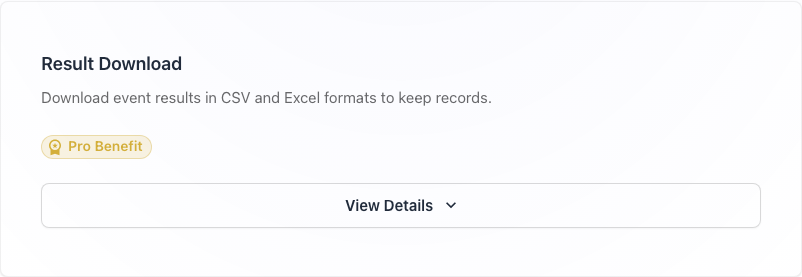
With unlimited result downloads, you can export the mapping of parents to officer roles directly into Excel or CSV. Stacking up history per grade — "served as president three years ago", "treasurer last year" — turns next year's exemption decisions into a single spreadsheet lookup. The classic "we picked someone who already did it" complaint that plagues manual rosters disappears at the source.
On top of that, 365-day long-term storage of results keeps the drawing page itself live for a full year, so handover across school years is just a matter of passing the same URL to the new officers. Opening last year's draw shows, in order, who took which role and how any re-draws unfolded.
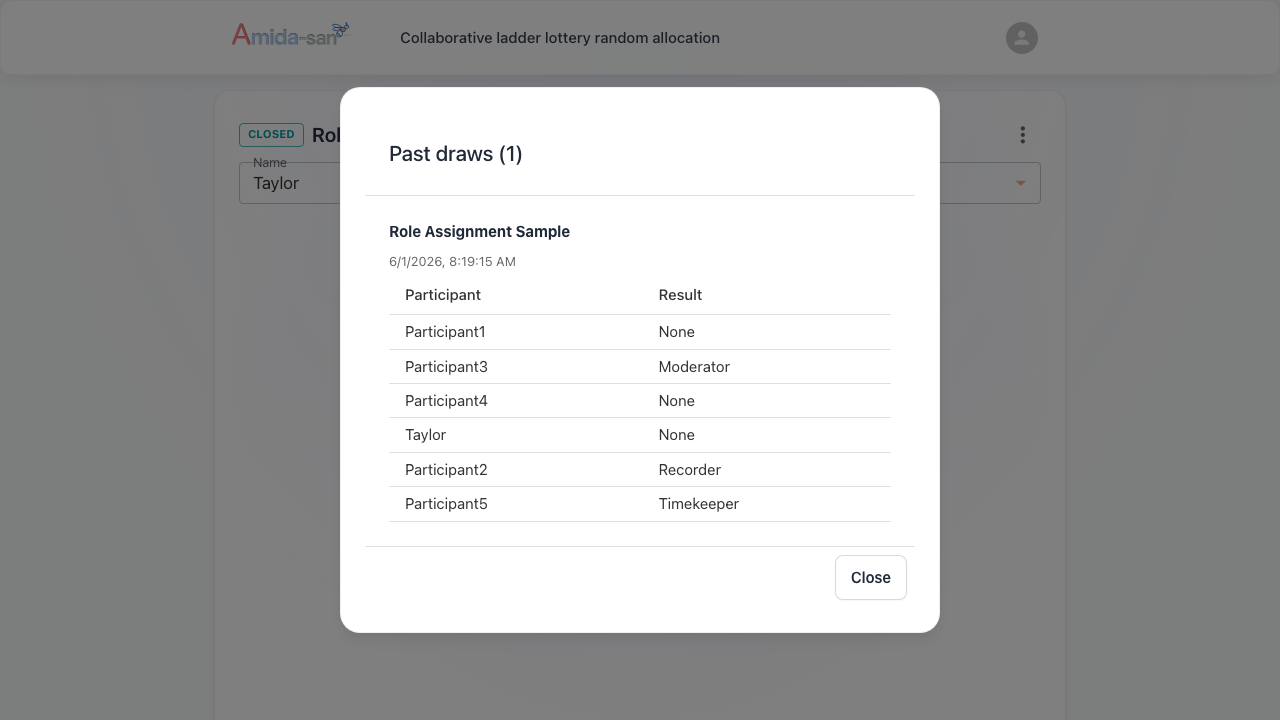
When someone declines and you need to draw again, fair re-draws with full history carry the weight. The original result and the "drew again after excluding the declined parent" result both remain as a tamper-proof timeline, defusing the suspicion that "they redrew on purpose to land on a specific parent". At the handover meeting, share the draw URL on screen and every parent sees the same record.
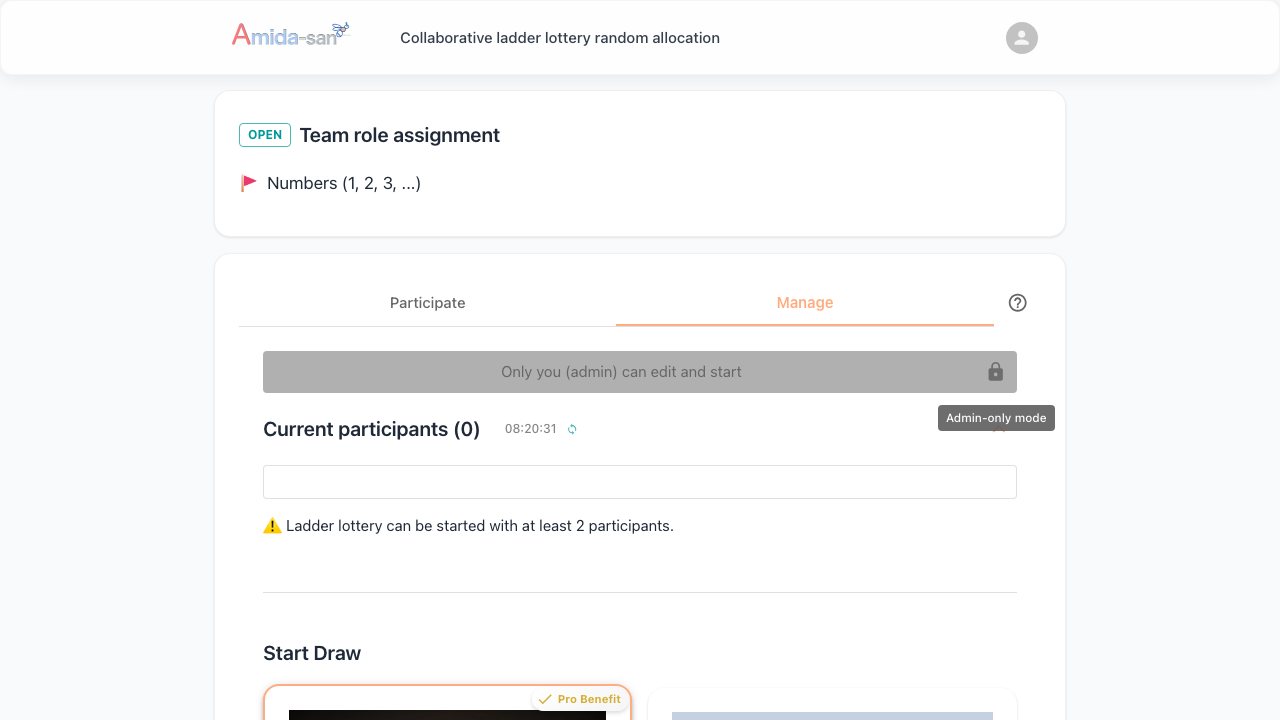
Finally, turning on the organizer-only account lock prevents anyone but the head officers from editing the draw after the result is finalized. The list of selected officers cannot be overwritten by a stray parent later on, intentionally or not.
Comparing Digital Ghost Leg and Traditional Paper Drawings
| Category | Paper Drawing | Digital Ghost Leg |
|---|---|---|
| Transparency | Suspicion of manipulation lingers | High, with full participation |
| Fairness | Luck-based only | Mathematically proven |
| Record-keeping | Paper storage | Verifiable via URL |
| Handling absentees | Difficult | Online participation available |
| Preparation time | 10 minutes | 5 minutes |
Using It for Online Parent Meetings
More schools are holding parent meetings online in recent years. The ghost leg format works even better in this setting. Simply sharing a URL lets everyone join from their smartphones, and screen sharing allows all participants to view the results simultaneously.
Compared to in-person meetings, there is less social pressure from "the atmosphere in the room," allowing parents to make more thoughtful decisions about volunteering or nominations. Some parents find it easier to ask questions through a chat feature than in person.
Frequently Asked Questions
Q1: What about parents who don't have a smartphone?
They can look at a neighbor's screen, have a spouse attend as a proxy, or borrow a tablet from the school.
Q2: Some parents are resistant to digital tools.
Advance explanation is key. Tell them: "Because everyone participates in the drawing process, no one can manipulate the results. It's a fairer and more transparent method than traditional paper drawings." Preparing a step-by-step guide with screenshots and distributing it beforehand also helps.
Q3: What about parents who have no history (e.g., first-year families)?
Everyone becomes eligible for the drawing. As a rule, sibling history is not factored in. This should be communicated at the enrollment orientation.
Q4: Can it be used for online parent meetings?
Yes, and it's actually better suited for online meetings. Simply sharing a URL lets everyone join from their smartphones, and results can be displayed via screen sharing. It's easier to set up than at in-person meetings.
Summary
Three keys to a smooth PTA officer selection process are transparency, fairness, and record-keeping. Prepare thoroughly in advance, document exemption and deferral criteria, and follow the sequence of discussion, volunteering, nomination, and then drawing.
Drawings conducted with Amida-san allow everyone to participate, guarantee mathematical fairness, and store verifiable results via URL for 180 days. Give it a try at your next PTA officer selection.
Related articles:
Try Amida-san Now!
Experience fair and transparent drawing with our simple and easy-to-use online ladder lottery tool.
Try it Now